
Racial Gaps in CAASPP Test Scores at Simi Valley School District May Cause Much Broader Problems for the City
CAASPP Test Scores At SVUSD Indicate Significant Racial Equality Problem That Even Jake Finch Cannot Spin
FEATURE STORY
1/27/202611 min read
Key Points
The 2025 CAASPP test results reveal alarming racial disparities in Simi Valley schools that demand immediate attention and systemic reform.
• Massive achievement gaps persist: Asian students outperform Black students by 37 points in math and 30 points in English, with Hispanic students showing even larger gaps.
• District leadership prioritizes PR over reform: Superintendent Youssef and communications staff focus on managing public perception rather than implementing targeted solutions for racial inequities.
• Educational disparities threaten economic development: The Town Center revitalization project could fail if families avoid a community where academic success correlates strongly with race.
• Systemic barriers require comprehensive action: With 78% white teaching staff serving 45% Hispanic students, the district needs culturally responsive teaching and targeted support programs.
• Community reputation and future prosperity hang in balance: Simi Valley must address these educational inequities or risk deterring diverse families and undermining long-term economic growth.
These findings highlight how educational equity directly impacts community development, economic growth, and social cohesion in rapidly changing demographics.
Simi Valley has long struggled with perceptions of racial bias that date back decades. The city’s reputation took a significant hit following the 1992 acquittal of LAPD officers in the Rodney King beating trial, which was held in Simi Valley and sparked the Los Angeles riots. That legacy continues to shape how the community is perceived today.
More recently, the city has faced additional controversies that have fueled ongoing concerns about racism within the community. In June 2020, during the height of national protests following George Floyd’s death, former LAPD officer and Simi Valley City Council member Mike Judge posted a controversial meme on Facebook depicting “spraying rioters with hoses attached to septic tank trucks.” The post, which referenced enforcing COVID-19 mask rules, drew widespread condemnation and prompted protests outside City Hall along with numerous critical emails from residents. The Simi Valley City Council formally adopted a resolution disavowing Judge’s posts, though it stopped short of censuring him, with council members divided between those defending free speech and those citing a pattern of offensive behavior.
Perhaps most troubling was the beating of Michael Robinson at the Regal Theaters, allegedly involving the son of a Simi Valley Police Officer who also serves as a Simi Valley Unified School District School Safety Officer. This incident, connecting law enforcement and school district personnel, has further fueled perceptions that Simi Valley is a community marked by systemic racism.
Whether these incidents represent isolated events or reflect deeper systemic issues remains a matter of community debate. However, they have created a backdrop that makes the latest educational data particularly significant. When a community already faces questions about racial equity in its public institutions—from city council chambers to police departments to school safety offices—persistent achievement gaps in its schools take on heightened importance.
WHATS HAPPENING
The 2025 CAASPP Test Results from Simi Valley Unified School District paint a troubling picture that appears to mirror broader community dynamics. The new data reveals persistent and widening achievement gaps that disproportionately impact Black and Hispanic students under the leadership of Superintendent Hani Youssef. The data raises a disturbing question: Has the educational culture created by Superintendent Youssef embedded systematic racism into the educational experience of Black and Hispanic students?
Test Scores Reveal Deep Divides
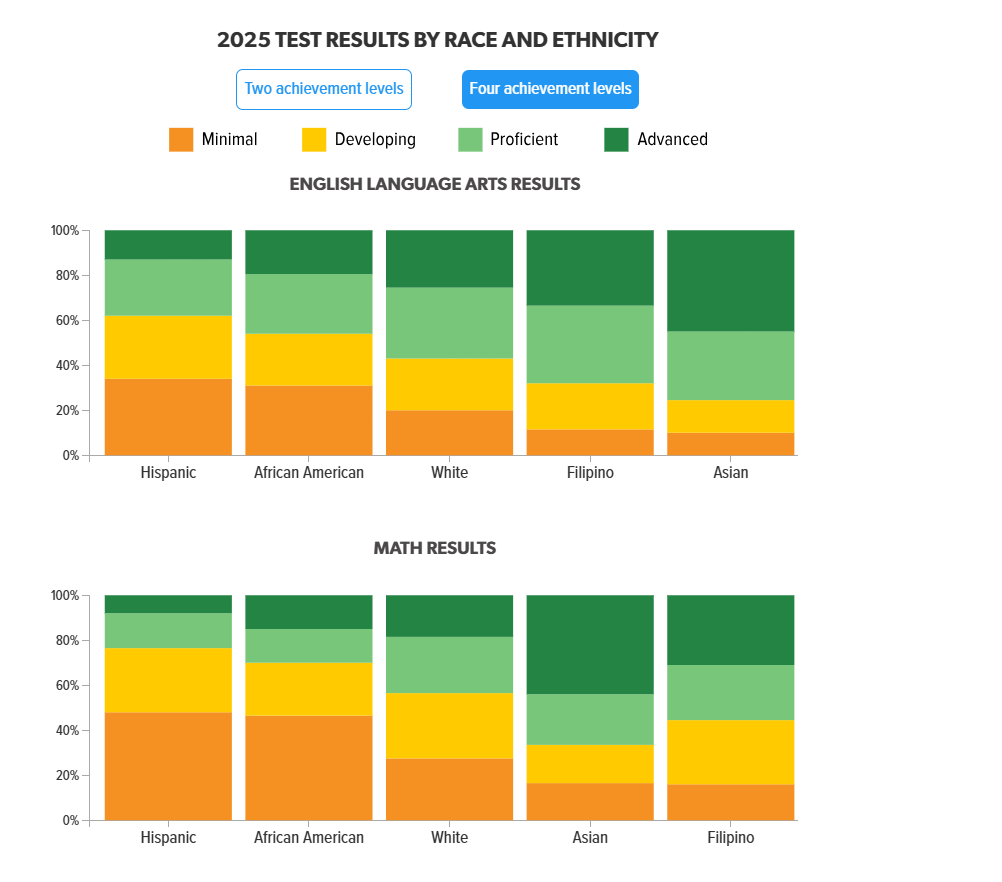
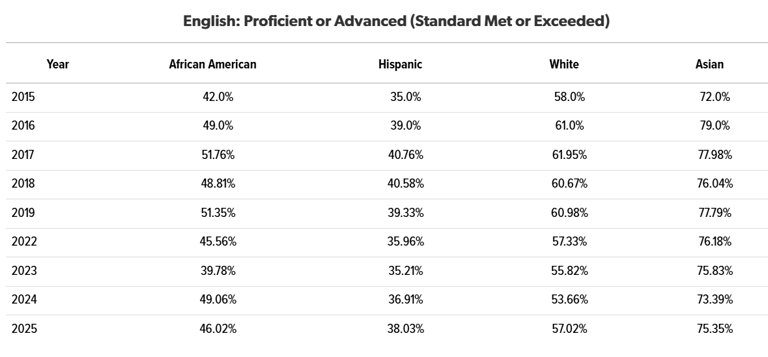
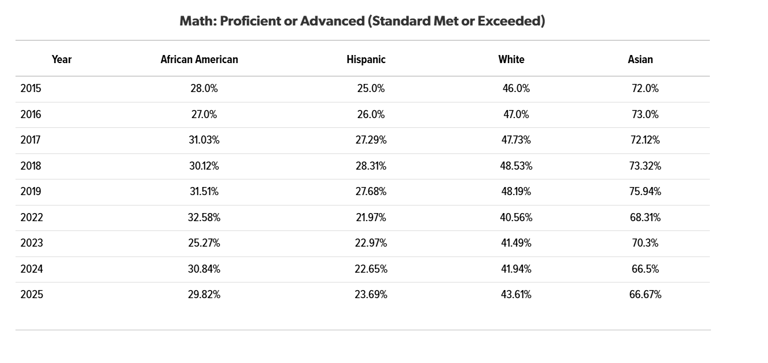
District-wide numbers mask the real story. While only 50.21% of students met or exceeded state standards in English Language Arts, and 36.67% achieved proficiency in mathematics in the Simi Valley Unified School District, these averages conceal significant racial differences that are crucial to understanding the overall educational landscape.
Asian students led the results in a remarkable way: an impressive 75.35% met the established English proficiency standards, and an equally commendable 66.67% reached the necessary benchmarks in mathematics. This indicates not only strong performance but also the effectiveness of the educational strategies in place for this demographic.
White students followed closely in the rankings, with 57.02% meeting the English standards, which, while lower than those of their Asian counterparts, still reflect a solid achievement. In mathematics, 43.61% of White students achieved proficiency, demonstrating their capabilities in this subject area.
These statistics reveal a complex picture of educational attainment within the district, underscoring the need to examine the underlying factors that contribute to disparities across racial and ethnic groups. Understanding these differences is essential to addressing the needs of all students and ensuring equitable educational opportunities for all.
But the picture becomes troubling considerably for students of color, revealing a stark disparity in educational achievement. Black students, for instance, achieved only 46.02% proficiency in English, which is significantly below the expected standards, and a dismal 29.82% in mathematics, indicating a serious gap in their mathematical skills and understanding. This situation is compounded when we look at Hispanic students, who fared even worse in comparison. They managed to meet only 38.03% of the English standards, which is alarmingly low, and an even more concerning 23.69% reached the necessary benchmarks in mathematics. These statistics highlight the urgent need for targeted interventions and support systems to address the educational challenges faced by these groups of students. The implications of these figures are profound, as they not only reflect the current state of educational equity but also raise questions about the systemic issues that contribute to such disparities.
The Achievement Chasm Widens
The achievement gap between Asian and Black students spans nearly 30 percentage points in English and a staggering 37 points in mathematics. Hispanic students trail their Asian peers by over 37 percentage points in English and 43 points in math. Even accounting for socioeconomic factors, these disparities persist—economically disadvantaged students across all racial groups consistently underperformed.
This isn't a recent development. Since 2015, these achievement gaps have remained stubbornly consistent, with only minor fluctuations but no meaningful progress. Black students actually lost ground from 2024, dropping from 49.06% to 46.02% in English and from 30.84% to 29.82% in math.
The district's overall performance raises additional red flags. With only 36.67% of students meeting math standards—well below state averages—about two-thirds of all students fail to demonstrate grade-level competency in mathematics.
Past Discrimination Shapes Present Challenges
Despite officials' claims that Simi Valley's racist reputation is unfairly tied to the King verdict, residents of color report ongoing discrimination that they experience in various aspects of their daily lives. The 2020 #DearSimiValley social media campaign, which gained significant traction and visibility, highlighted numerous incidents of racial bias that individuals have encountered within the community. This campaign served as a powerful platform for residents to share their personal stories and experiences, shedding light on the pervasive nature of discrimination. One poignant example comes from former resident Kevin Cosney, who described facing harsher punishment than a white student after a racially motivated confrontation at Royal High School, illustrating the disparities in treatment based on race.
How can students thrive academically when they face bias in their daily school experiences, which can create an environment that is not conducive to learning and personal growth? This question raises important considerations about the impact of discrimination on educational outcomes and the overall well-being of students.
WHY IT MATTERS:
Simi Valley Town Center Proposal Could Be Impacted by Educational Inequity at Simi Valley Unified School District
If racial inequities in Simi Valley Unified School District standardized test scores were not enough, these results couldn't come at a worse time for Simi Valley. The city's Town Center revitalization project aims to attract new residents, including diverse families who may question whether this community can adequately serve students of color. Bo Okoroji, Founder and CEO of Steerpoint Capital and one of the owners of Simi Valley Town Center, is heavily involved in Walker & Dunlop's CRE Diversity Initiative. The revitalization will likely include a mix of retail and residential spaces. The challenge for Okoroji is how to convince potential Black and Hispanic homebuyers to purchase homes in Simi Valley, where their children may not receive an equitable education compared to Asian and White students. Bo Okoroji brings impressive credentials and extensive experience to residential development. However, his involvement in this project raises important questions about the implications of building homes in a community where educational outcomes for students of color lag significantly behind those of their peers. What message do these test scores send to the families he hopes to attract?
The Town Center revitalization project represents much more than just new housing options; it serves as a crucial test of whether Simi Valley can successfully attract a diverse range of families while addressing the significant racial disparities evident in its schools. This initiative is not merely about constructing new residential units; it embodies a broader vision of community development and inclusivity. By focusing on creating an environment that welcomes families from various backgrounds, the project aims to foster a sense of belonging and unity among residents, encouraging them to engage with one another and build meaningful connections.
Additionally, it seeks to tackle the pressing issue of racial inequality within the educational system, a longstanding concern for the community that has affected countless families over the years. The success of this project could set a significant precedent for future developments in the area, highlighting the importance of diversity and equity in urban planning and community engagement. By addressing these critical issues, the Town Center revitalization project aims to improve Simi Valley's physical landscape while striving to create a more equitable and inclusive society for all residents, ensuring that everyone has access to the resources and opportunities they need to thrive.
Superintendent Hani Youssef has acknowledged these achievement gaps in previous reports. However, acknowledgment without action rings hollow. Critics argue that his administration has failed to implement effective strategies to close these persistent racial disparities, potentially undermining Simi Valley's efforts to rebrand itself as a welcoming, inclusive community.
Simi Valley's mixed-use Town Center development faces a fundamental challenge. Prospective homebuyers, especially those with families, typically conduct thorough research on school districts before making purchasing decisions. The latest test scores reveal a troubling picture that cannot be ignored. The 37-point achievement gap between Asian and Black students in mathematics is not just an educational statistic; it represents a potential economic liability with far-reaching implications for the community.
Real estate agents know that school performance is a major driving factor behind housing demand. When nearly half of Hispanic students fail to meet established English language standards and more than 70% struggle with mathematics, these issues are significant red flags for families considering expensive home purchases in the Simi Valley area.
As the CEO of Steerpoint and a prominent member of Walker & Dunlop's CRE Diversity Initiative, the irony of the situation is not lost on observers: a Black developer is leading housing projects in a district where Black students score nearly 30 percentage points lower than their Asian classmates in English language proficiency. This raises the question of whether families attracted by Okoroji's diversity initiatives will choose to stay once they examine the local school performance data and the educational landscape.
Smart families, particularly those who are conscientious about their children's future, research more than just home prices—they delve into the educational opportunities available in the area. The substantial achievement gaps present at Simi Valley Unified could serve to deter potential residents, regardless of their racial background or socioeconomic status. Parents want to ensure that their children attend schools where all children have the opportunity to succeed, not systems where academic achievement correlates strongly with ethnicity and race.
These disparities create broader economic risks that extend beyond the realm of housing development. Businesses that are considering Simi Valley as a potential location for their operations evaluate workforce development prospects and the overall stability of the community. Persistent educational inequities signal systemic problems that could adversely affect the long-term economic viability of the area.
District leadership appears to be more focused on managing public perceptions than on addressing the root causes of these educational disparities. Teachers continue to work diligently against these systemic constraints, which often hinder their ability to provide the best possible education for their students. However, they need administrators who are willing to confront uncomfortable truths about institutional failures that have persisted over time. Instead of merely crafting public relations strategies that may obscure the underlying issues, these administrators must be prepared to engage in honest and open discussions about the challenges faced within the educational system. This willingness to address difficult realities is crucial for fostering an environment where meaningful change can occur, ultimately benefiting both educators and students alike. By acknowledging and tackling these systemic problems head-on, administrators can help create a more supportive and effective educational framework.
Conclusion
Simi Valley's future prosperity and economic health are intricately tied to whether district officials will prioritize genuine educational equity over merely managing their public image. The decisions made today will have lasting impacts on the community's ability to thrive and grow in the coming years, shaping not only the educational landscape but also the overall well-being of the community for generations to come.
The alarming 37-point mathematics gap between Asian and Black students in the Simi Valley Unified School District is not just a mere statistic or a number on a spreadsheet; it represents a systematic failure that threatens both educational equity and the community's economic future. This gap is a clear indicator of the disparities that exist within the educational system, highlighting the urgent need for reform and targeted interventions.
These test score disparities reveal uncomfortable truths about a district where 78% of certificated staff are white, serving a student population that is 45% Hispanic. The numbers do not lie: Black students' math proficiency dropped from 30.84% to 29.82% between 2024 and 2025, while their Asian peers maintained a significantly higher proficiency rate of 66.67%. That's not progress—it's regression, and it underscores the pressing need for systemic change to address these inequities.
District leadership under Superintendent Youssef seems more focused on managing optics and public perception than on addressing the root causes of these disparities. Critics rightly point out that acknowledging disparities without substantive action merely maintains the status quo, perpetuating a cycle of inequity.
The Town Center revitalization project adds an additional layer of urgency to these educational failures. Bo Okoroji's involvement as a Black developer raises a fundamental question: can Simi Valley truly attract diverse families while its schools systematically underserve students of color? Educational quality is a significant driver of residential decisions, and families—regardless of their background—typically avoid communities where academic success is closely correlated with race. This trend could have long-term implications for the community's demographic and economic diversity.
What is particularly troubling is how district communications, managed by Public Information Officer Jake Finch, consistently emphasize "inclusive learning environments" while avoiding substantive discussions about the racial disparities that persist within the educational system. This approach prioritizes public relations over genuine reform, creating a façade of progress while failing to address the underlying issues that need urgent attention.
The stakes extend far beyond mere test scores. Simi Valley's reputation, economic development, and moral standing depend on whether officials will confront these inequities head-on. Teachers continue to work diligently within these systemic constraints, but they need leadership that is willing to implement targeted solutions rather than broad equity initiatives that dilute focus and fail to produce meaningful change.
The data speaks clearly—the question remains whether anyone with the authority to create change is actually listening and willing to take the necessary steps to ensure that all students, regardless of their racial or ethnic background, have access to the quality education they deserve.








Support
Confidential reporting for abuse and misconduct cases.
Safety
Trust
GETHELP@REPORTSIMIVALLEYUSD.COM
© 2025. All rights reserved.